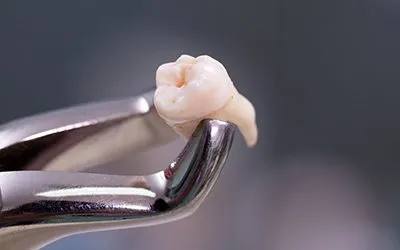
An extraction is the removal of a tooth or molar. It is done under local anaesthetic. Sometimes the tooth comes out in one piece; sometimes it is removed in sections — for example with a wisdom tooth or strongly curved roots.
A tooth is removed when saving it is no longer possible or no longer advisable: with very extensive tooth decay, a fracture below the gum line, advanced bone loss around the tooth, or a wisdom tooth causing problems. Saving the tooth comes first; whether that is still possible is assessed by the dentist after an examination and usually an X-ray.
After the anaesthetic, the tooth is loosened and removed. Sometimes a stitch is needed to close the wound. You will then receive instructions on what is best to do and avoid during the first hours and days.
This leaves an open space in the row of teeth. Whether and how it is best to replace it — with an implant, a bridge or a denture — is a separate decision that the dentist will discuss with you. After an extraction, bleeding, swelling and pain can occur; the instructions you receive will explain this.
This page gives general information about the treatment. It is not advice about your own situation: what applies to you will be decided by the dentist after an examination. If you have a question or a complaint, please call the practice on (0032) 089 44 02 01.
Stalenstraat 133, 3600 Genk
The map has not been loaded, because this would send your data to Google.
Leave a message or call the practice. We will get back to you as soon as possible.